News Roundup | July 2026
July was busy for Merman Conservation Expeditions, with new alien species records in Greece, a marine biodiversity survey, and new apps and books launched. They also engaged with several environmental consultations, including those related to European ocean research...
Dear friends and Supporters,
July was an especially active month for Merman Conservation Expeditions Ltd, with new wildlife records, field surveys, conservation actions, digital tools, publications, educational resources and participation in environmental consultations.
Our work continued to connect scientific observation, practical conservation, citizen science and accessible digital technology.
News from Greece and the European Union
New alien species record in South-east Pelion
On 21 July 2026, we recorded the alien crab Percnon gibbesi (Nimble spray crab) at Theotokos in South-east Pelion through the NATIV-Pelion project.
Two individuals were initially observed. During a follow-up survey on 22 July, we recorded 32 individuals of different sizes and age classes, including juveniles and large adults. The observations indicate that the species is already established locally rather than being represented by only isolated individuals.
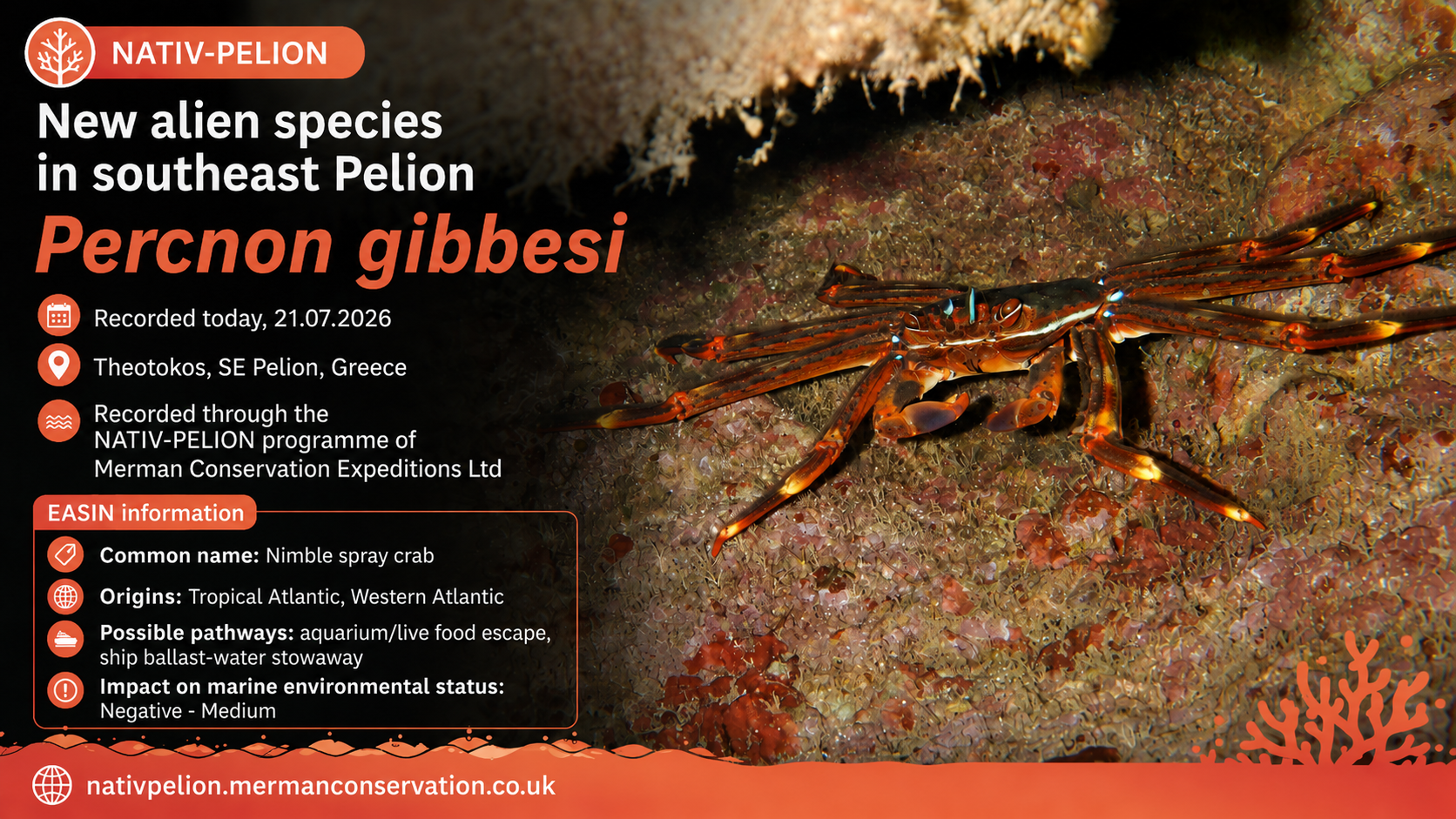
This appears to be the first documented record of the species from this part of Greece. Continued monitoring will help us understand its distribution, population growth and potential ecological effects.
Marine biodiversity survey at Theotokos
A wider marine biodiversity survey was also carried out at Theotokos during July.
Species recorded included Aiptasia mutabilis (Trumpet anemone), Epinephelus marginatus (Dusky grouper), Codium fragile and Tethya aurantium (Sea orange), alongside numerous fish, invertebrates, algae and other organisms associated with the rocky coastal habitat.
The observations will contribute to the continuing biodiversity inventory of South-east Pelion and support the early detection of ecological changes and newly arriving species.
Simulation of alien species spread from the Suez Canal
During July, we developed an educational simulation illustrating how alien marine species may spread from the Suez Canal into the eastern Mediterranean and gradually expand towards other Mediterranean regions.
The simulation helps explain the role of shipping, currents, warming waters, suitable habitats and repeated introductions in the expansion of non-native species.
It is designed as a public communication and educational tool rather than a precise prediction of where an individual species will appear. Its purpose is to make the processes behind biological invasions easier to understand and to highlight the importance of early detection and rapid response.
New protection signs for Mediterranean monk seals
Two new educational signs were installed at Liri Beach in South-east Pelion to help protect Monachus monachus (Mediterranean monk seal).
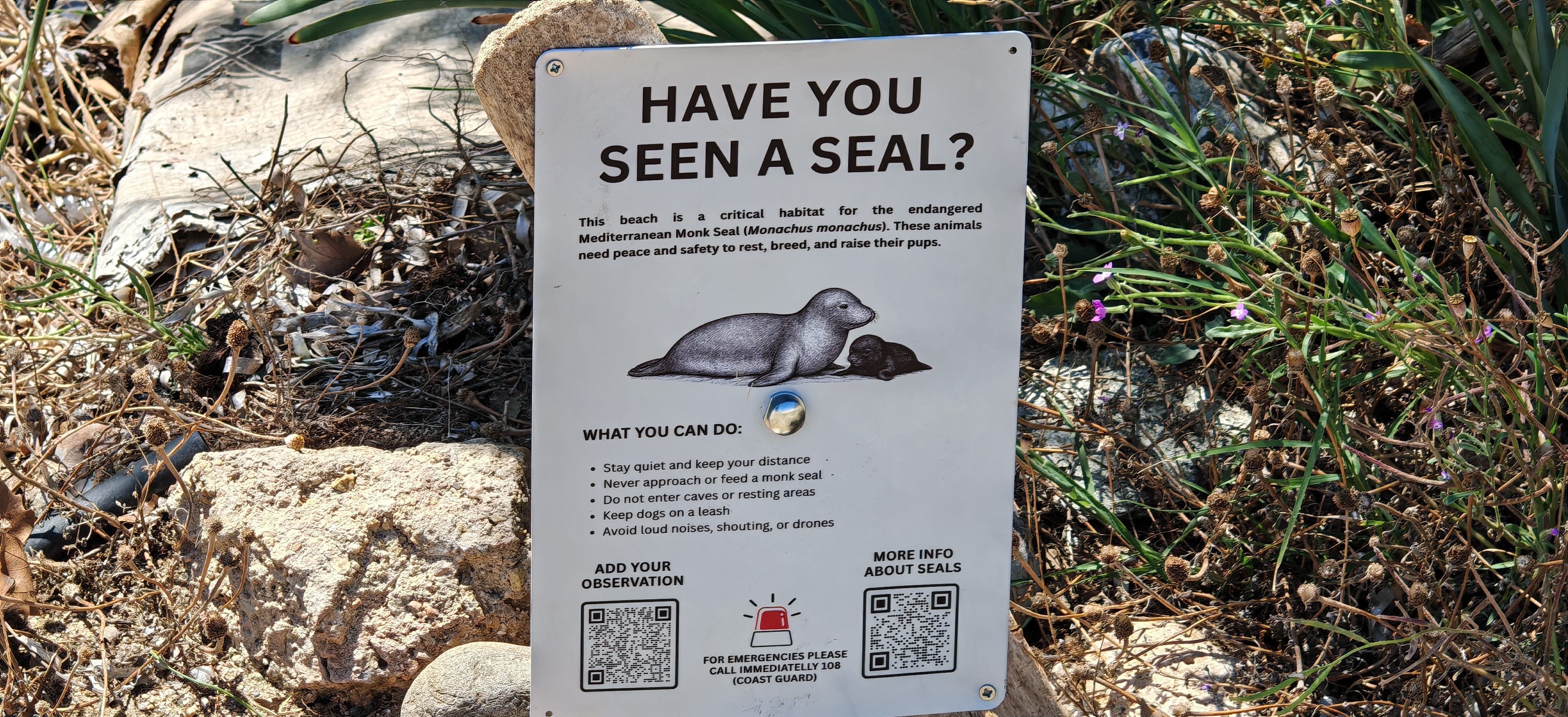
The signs provide practical advice for residents and visitors, including:
Maintain a safe distance from seals.
Remain quiet and avoid sudden movements.
Never approach, touch or feed a seal.
Keep dogs on a lead.
Avoid entering caves used by seals.
Do not use drones near resting animals.
Liri and its surrounding coastal habitats are important for local wildlife. Clear public information can reduce disturbance and encourage respectful behaviour when people encounter protected marine mammals.
New apps and websites
Wildlife Consulting
Our new Wildlife Consulting platform is now operational for clients, partners and wildlife consultants.
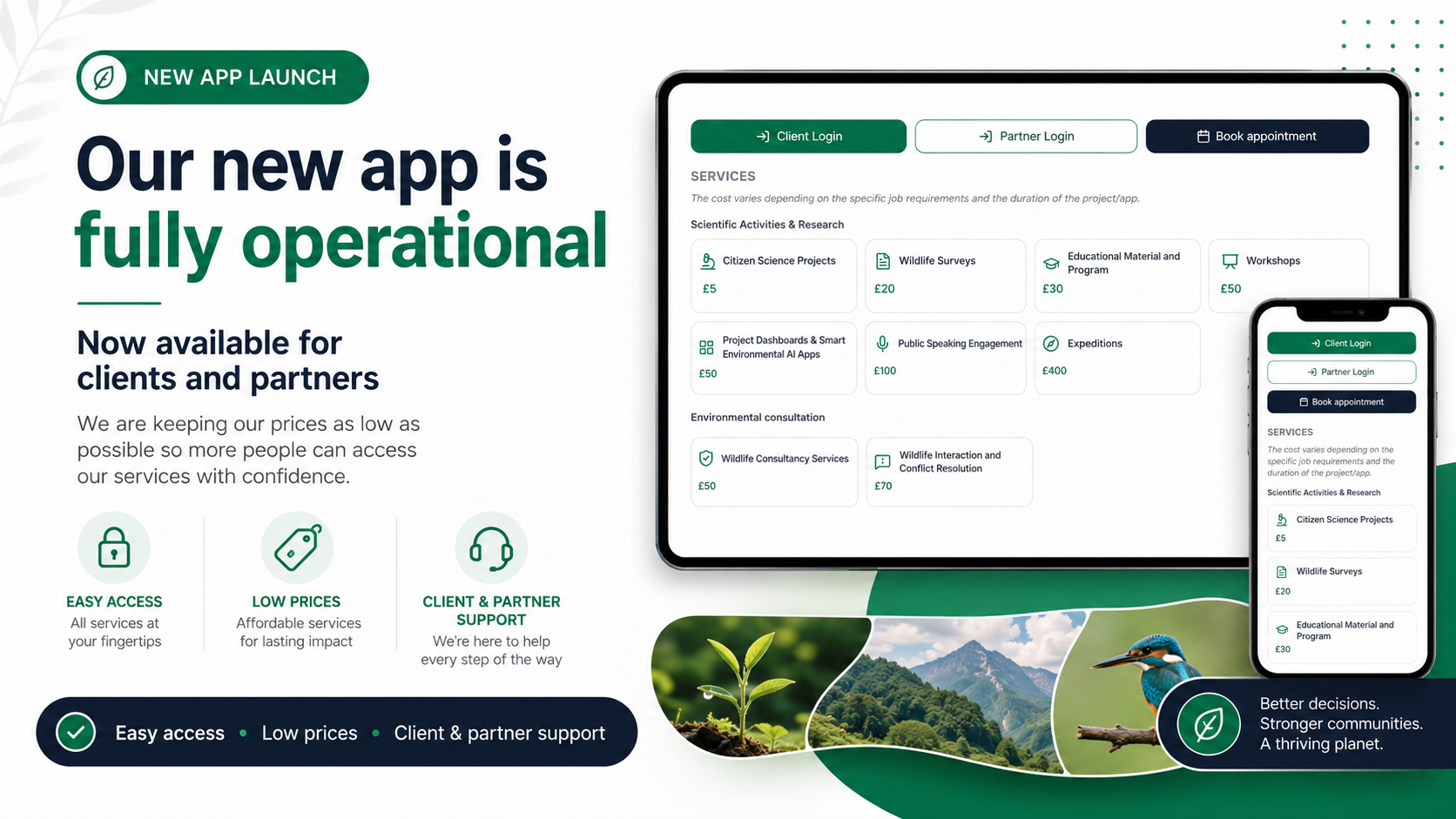
The system provides access to environmental and wildlife consulting services through a structured digital platform. It was developed to make professional assistance easier to access while keeping services affordable for individuals, organisations and conservation projects.
Visit:
https://consulting.mermanconservation.co.uk/
National Marine Week
We also launched a dedicated National Marine Week platform containing educational information about marine wildlife, shore surveys, rockpooling, snorkelling, responsible wildlife observation and citizen science.
The platform explains how members of the public can survey coastal habitats and record marine species safely and responsibly.
Visit:
https://marineweek.mermanconservation.co.uk/
Marine Notes Journal receives its ISSN
Marine Notes Journal has officially received its International Standard Serial Number:
ISSN 2979-8841
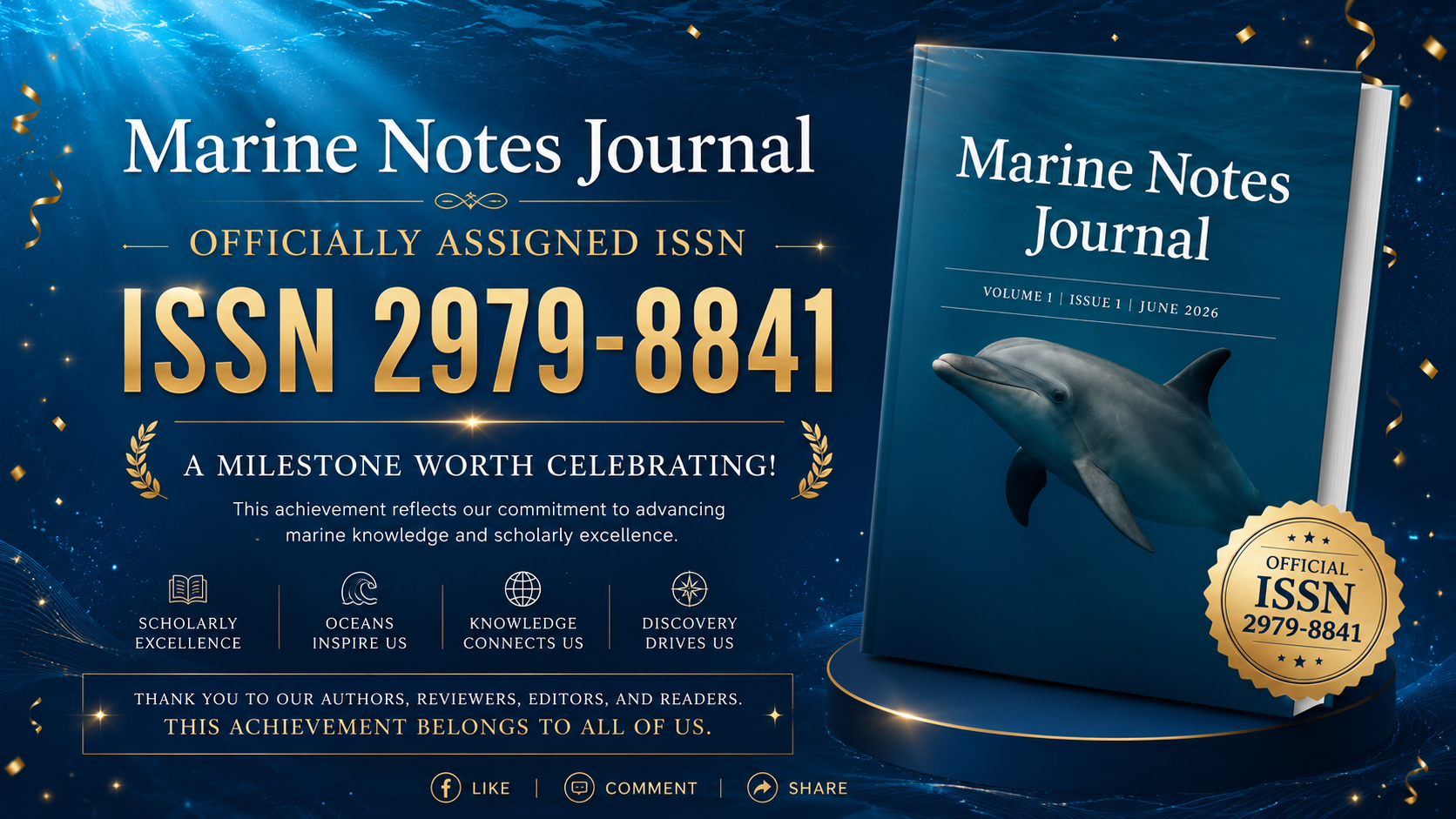
Marine Notes Journal was created as an accessible publication platform for research articles, field observations, conservation case studies, reviews and communications relating to marine science and ocean conservation.
Receiving an ISSN represents an important step in the journal’s development and long-term recognition as a continuing publication.
New books
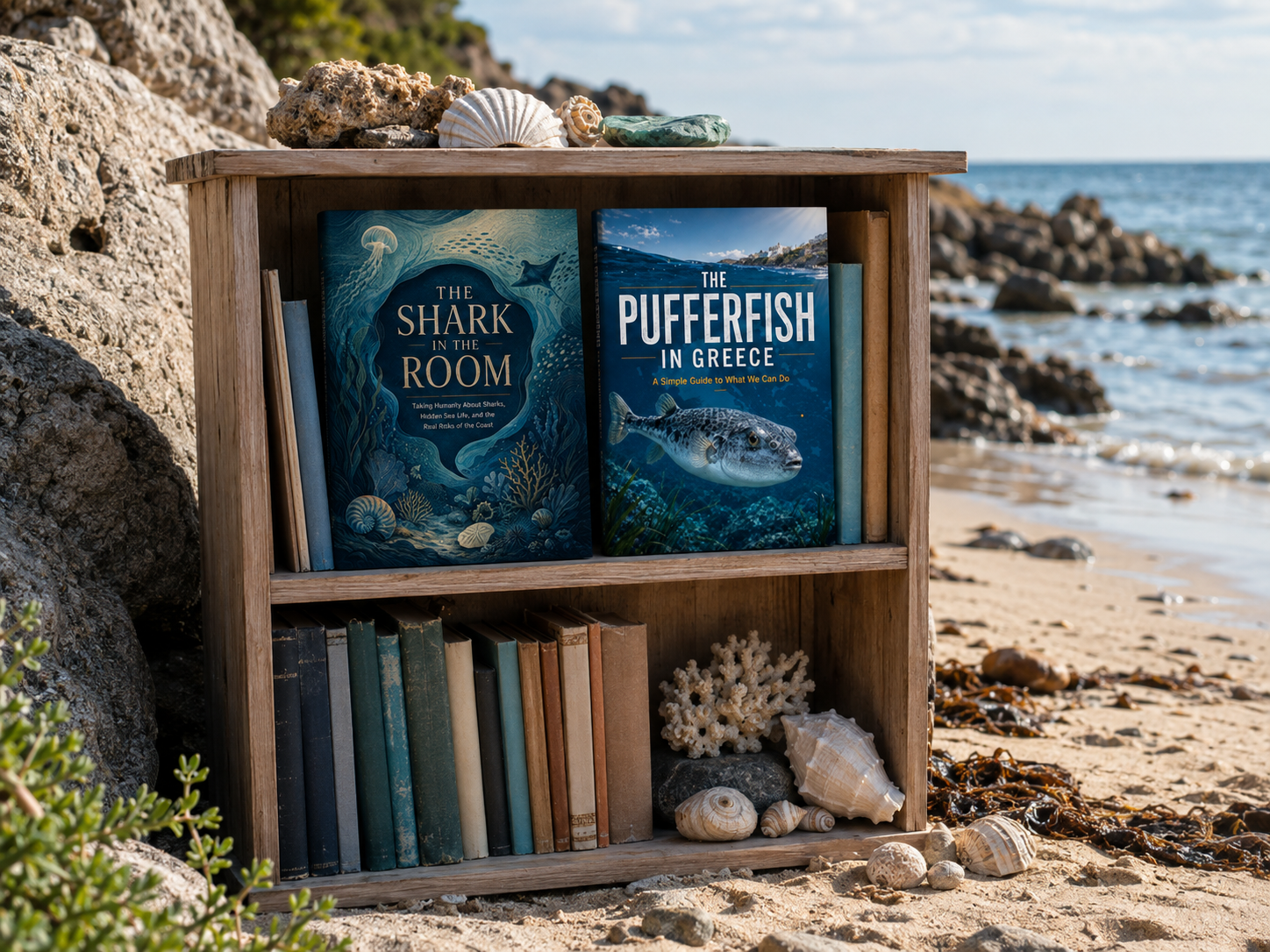
The Shark in the Room
The Shark in the Room explores how sharks, hidden marine wildlife and coastal risks are communicated to the public.
The book examines the gap between scientific evidence and public perception, including the influence of sensational headlines, incomplete information and fear-based communication. It encourages a more honest and balanced discussion about sharks and the wider marine environment.
The Pufferfish in Greece: A Simple Guide to What We Can Do
This practical guide explains the expansion of invasive pufferfish in Greek waters and the actions that citizens, swimmers, fishers, authorities and conservation organisations can take.
The book covers identification, public safety, reporting, monitoring, responsible handling and possible management approaches. It also explains why long-term action must combine public awareness, scientific monitoring and targeted removal programmes.
Consultations We Engaged With
Merman Conservation Expeditions Ltd continued contributing to public consultations relating to environmental policy, fisheries management and marine conservation.
Draft environmental principles and integrating environmental protection statement
This Welsh Government consultation concerned how environmental principles should guide public authorities and how environmental protection should be integrated into decision-making.
Our response supported clear, enforceable principles that translate environmental commitments into practical and measurable action.
European ocean research and innovation strategy
The proposed European strategy aims to strengthen ocean research, innovation, cooperation and the use of scientific evidence in policy.
Our contribution highlighted the importance of accessible biodiversity data, citizen science, digital monitoring tools and stronger connections between local observations and European marine policy.
Sustainable fishing in the EU: state of play and orientations for 2027
This initiative reviews progress towards healthy fish stocks, the implementation of fisheries policy, the socioeconomic performance of the fishing fleet and the priorities that will shape fishing opportunities for 2027.
Our response emphasised that fishing opportunities must remain consistent with scientific advice, ecosystem recovery, precautionary management and long-term resilience.
Five proposed joint UK Fisheries Management Plans for pelagic stocks
We also reviewed the proposed joint UK Fisheries Management Plans covering five major pelagic stocks.
These plans concern North Sea herring, West Coast of Scotland and Clyde herring, Atlanto-Scandian herring, Northern Shelf mackerel and Northern Shelf blue whiting.
Our contribution supported stronger monitoring, transparent decision-making, precautionary catch limits and management measures that account for the wider ecological importance of pelagic fish as prey for seabirds, marine mammals and larger fish.
Looking ahead
During the coming months, we will continue developing our digital conservation platforms, recording biodiversity in South-east Pelion, monitoring alien species, supporting citizen science and contributing to environmental policy consultations.
We will also continue expanding Marine Notes Journal, developing educational publications and making practical wildlife conservation tools accessible to a wider audience.
Thank you to everyone who submitted observations, shared our resources, participated in surveys or supported our work during July.